

Following the 18650 capacity tester build part1 & part2
The 18650 Cell belongs to the Lithium Ion type chemistry, very high care has to be taken while using it. This includes while both charging and discharging the batteries. While discharging the battery, care should be taken that we never consume more current than the C rating and also the battery should never be discharged below 3.0V. Normally a circuit will be employed to monitor the discharge current and under voltage value to cut off the battery from the load if anything goes wrong. Also care should be taken that the battery never experiences a short circuit or reverse polarity.
mAh is a measure of battery capacity, and it utilizes all three concepts (electric charge, current, and time) to estimate how much electricity the battery can hold. For example, a capacity rating of 1,000mAh on a battery means that once fully charged, it can sustain an electric flow of 1,000mA for one hour.
The ENE is Watt hours
Wh is short for Watt Hours.
The energy capacity or capacity to do useful work stored in the battery.
The maximum electric current a battery can output depends on the battery's structure and is measured as the discharge rating.
We are using different methods to better understand the discharge and capacity of LiPo batteries
This is some actual testing now we have figured out a system. Battery #2
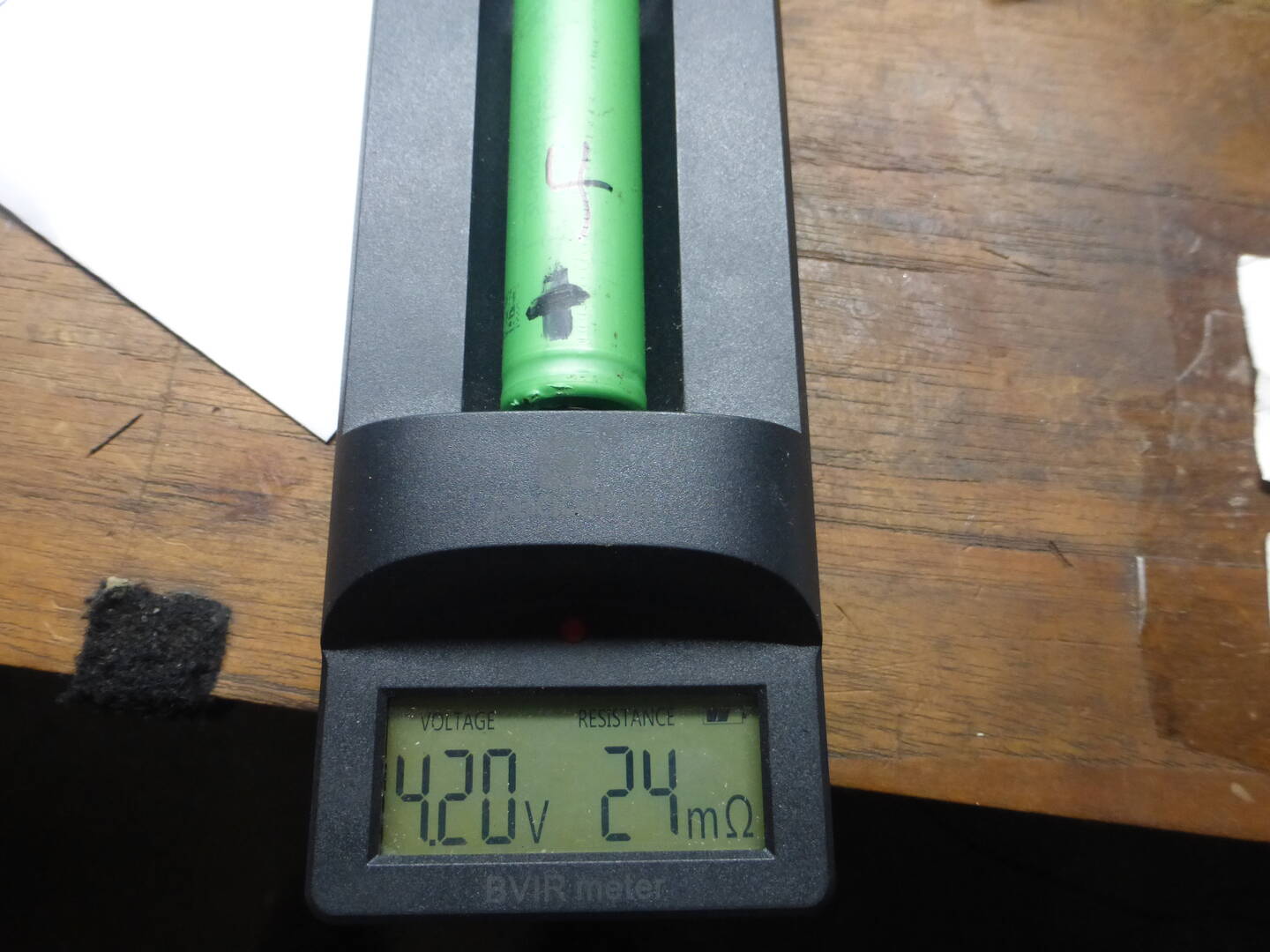
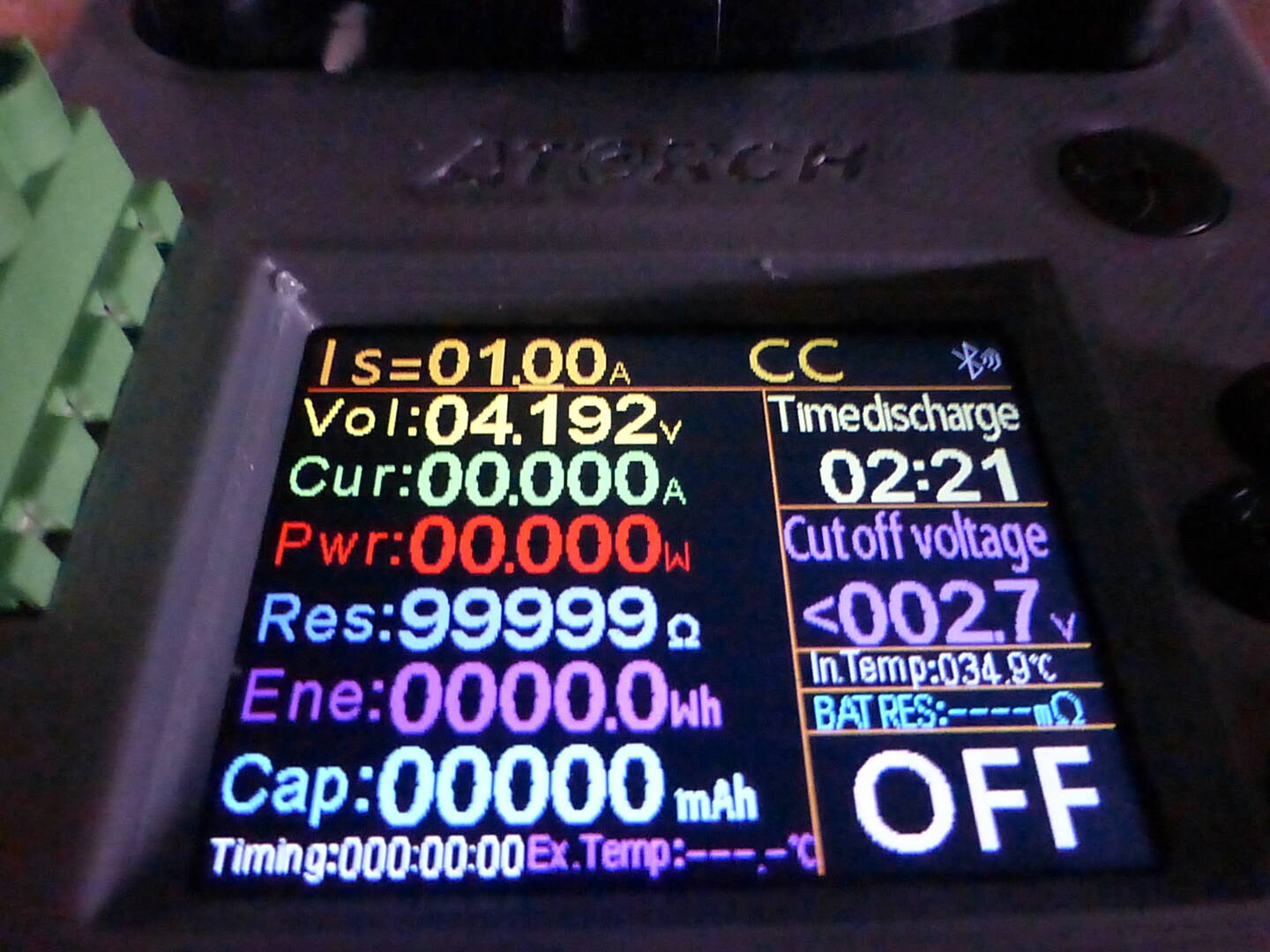
After 1amp discharge. The dl24 is setup to stop at 2.7. the batteries bounce back after removing them to 3.12
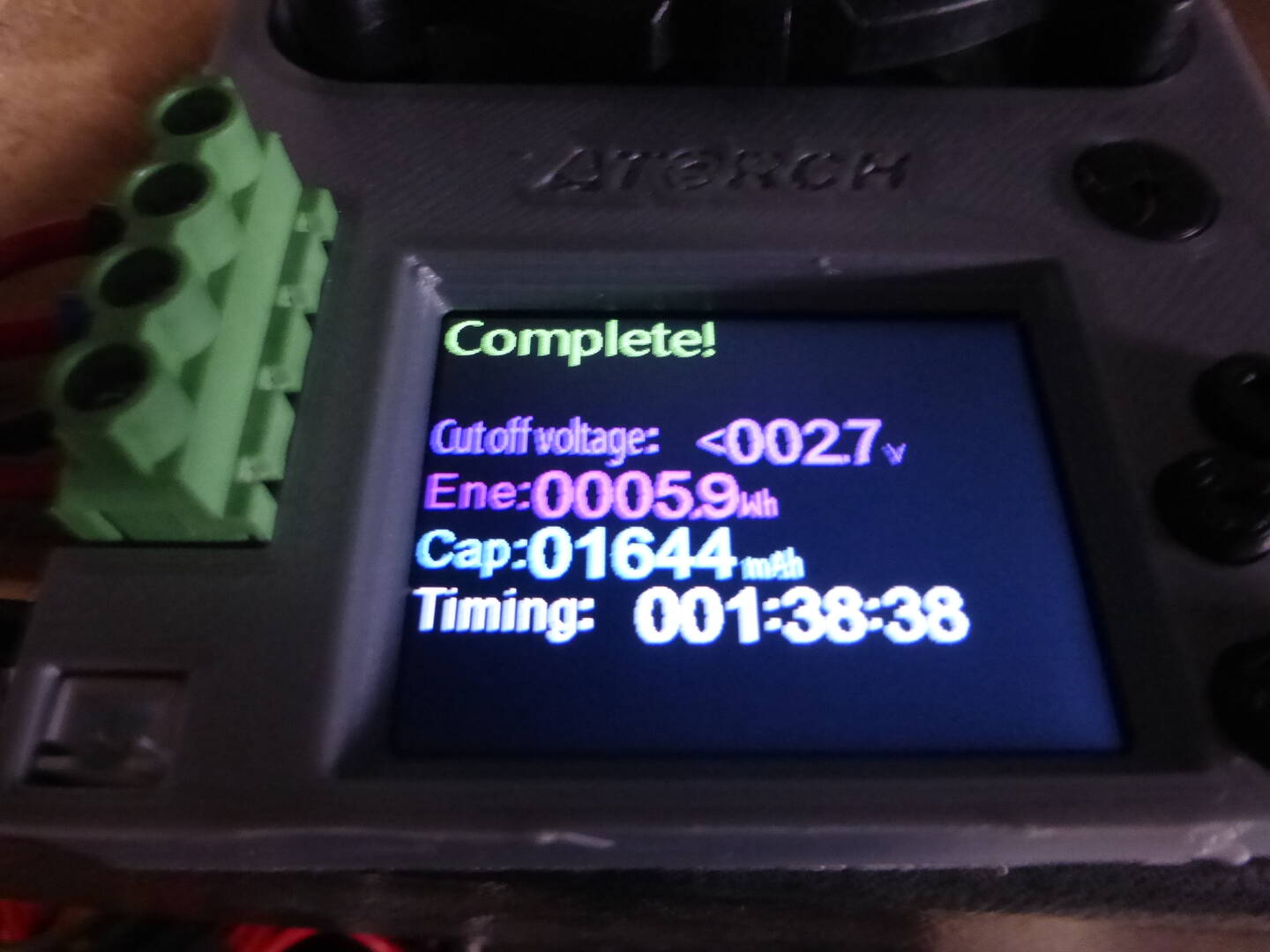
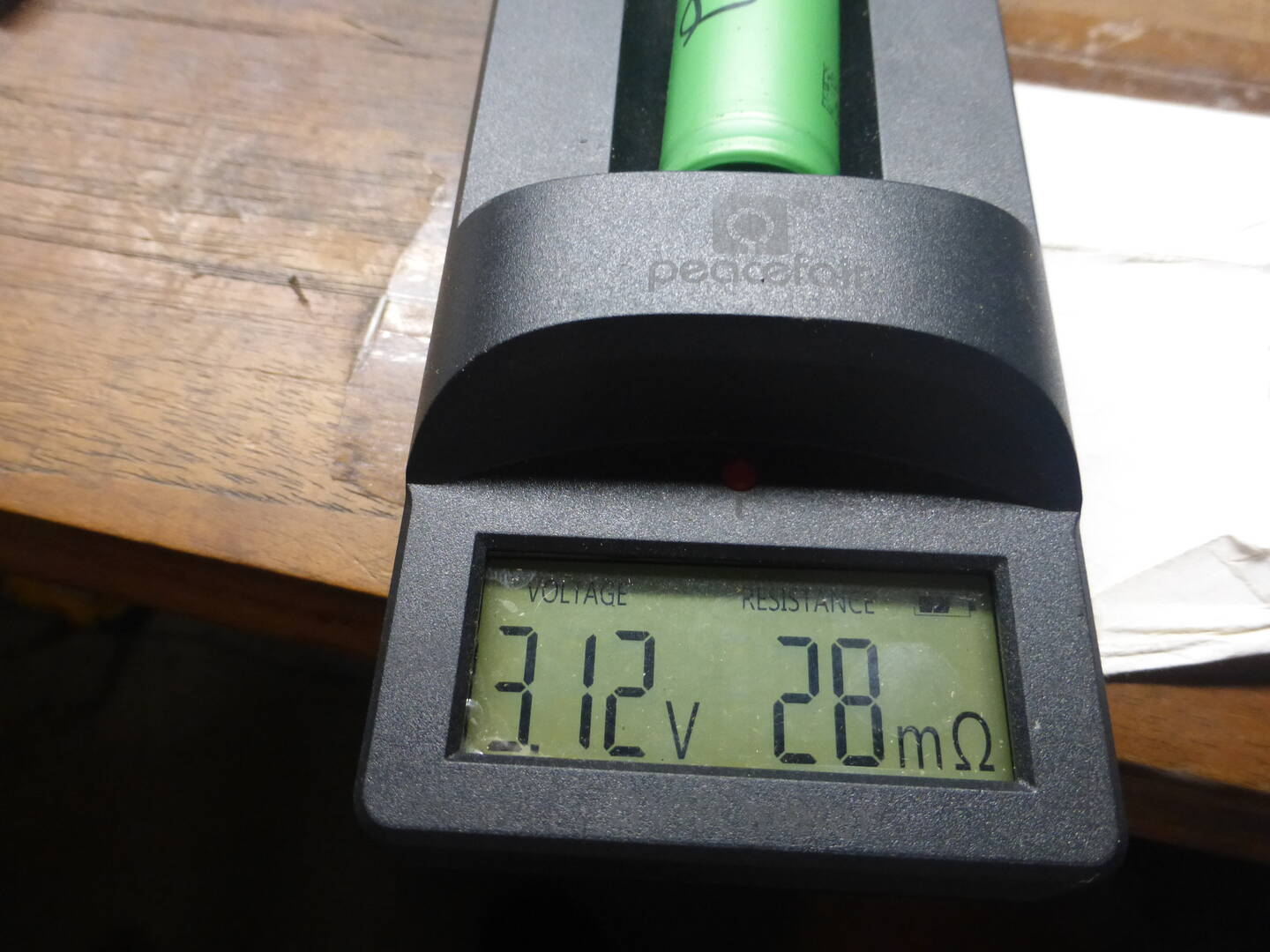
Beginning Test 2 on battery #2
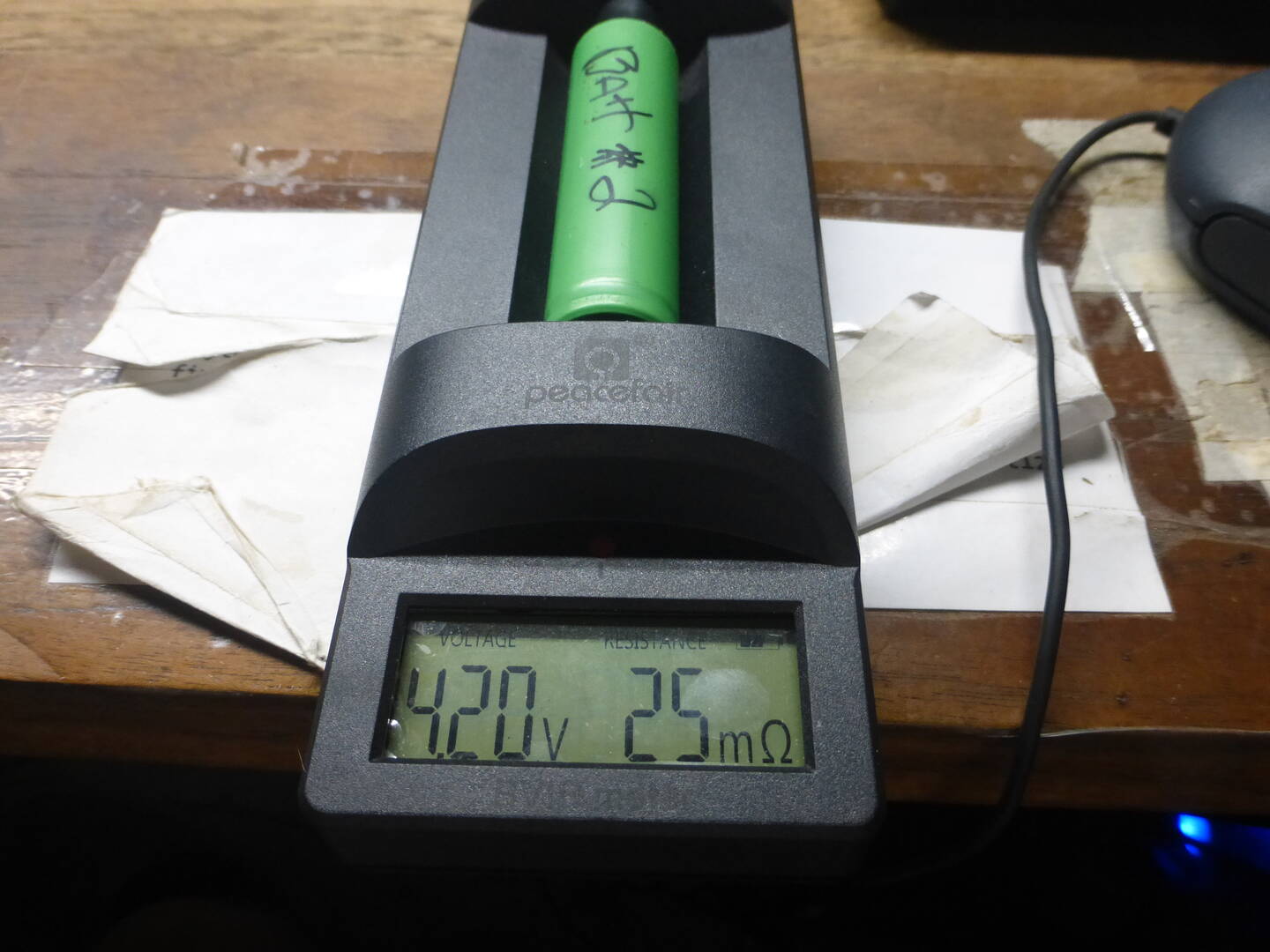
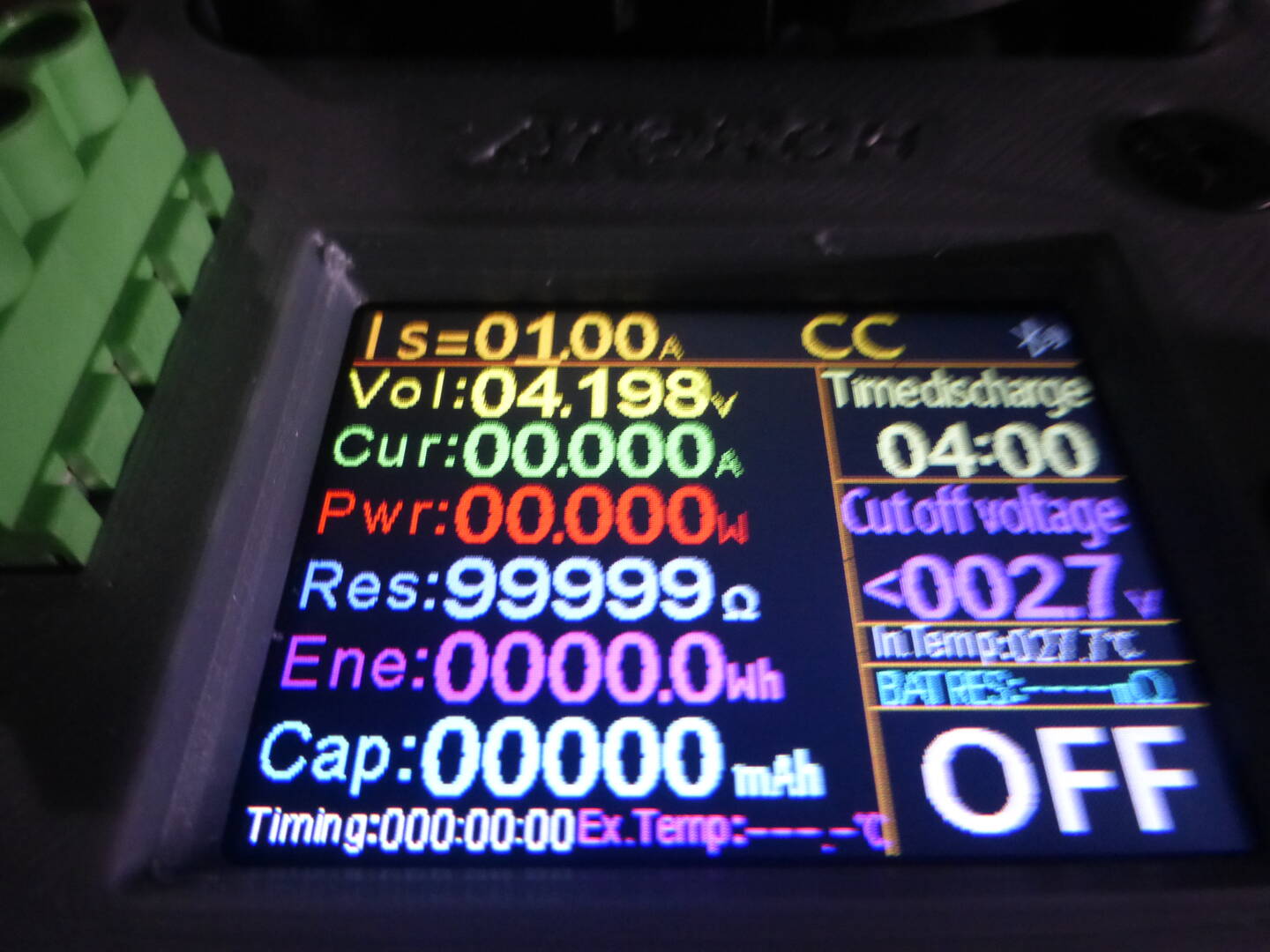
after testing
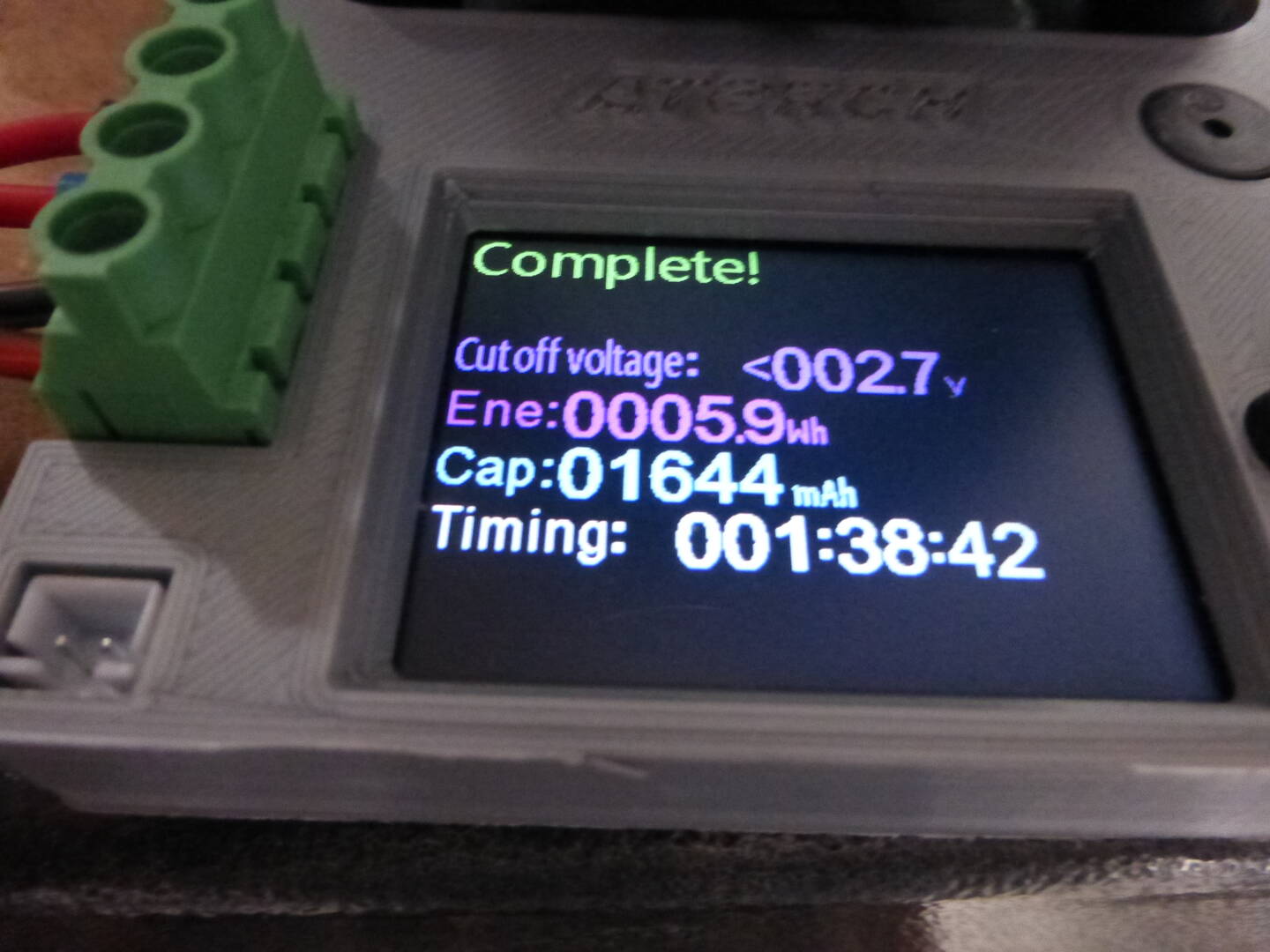
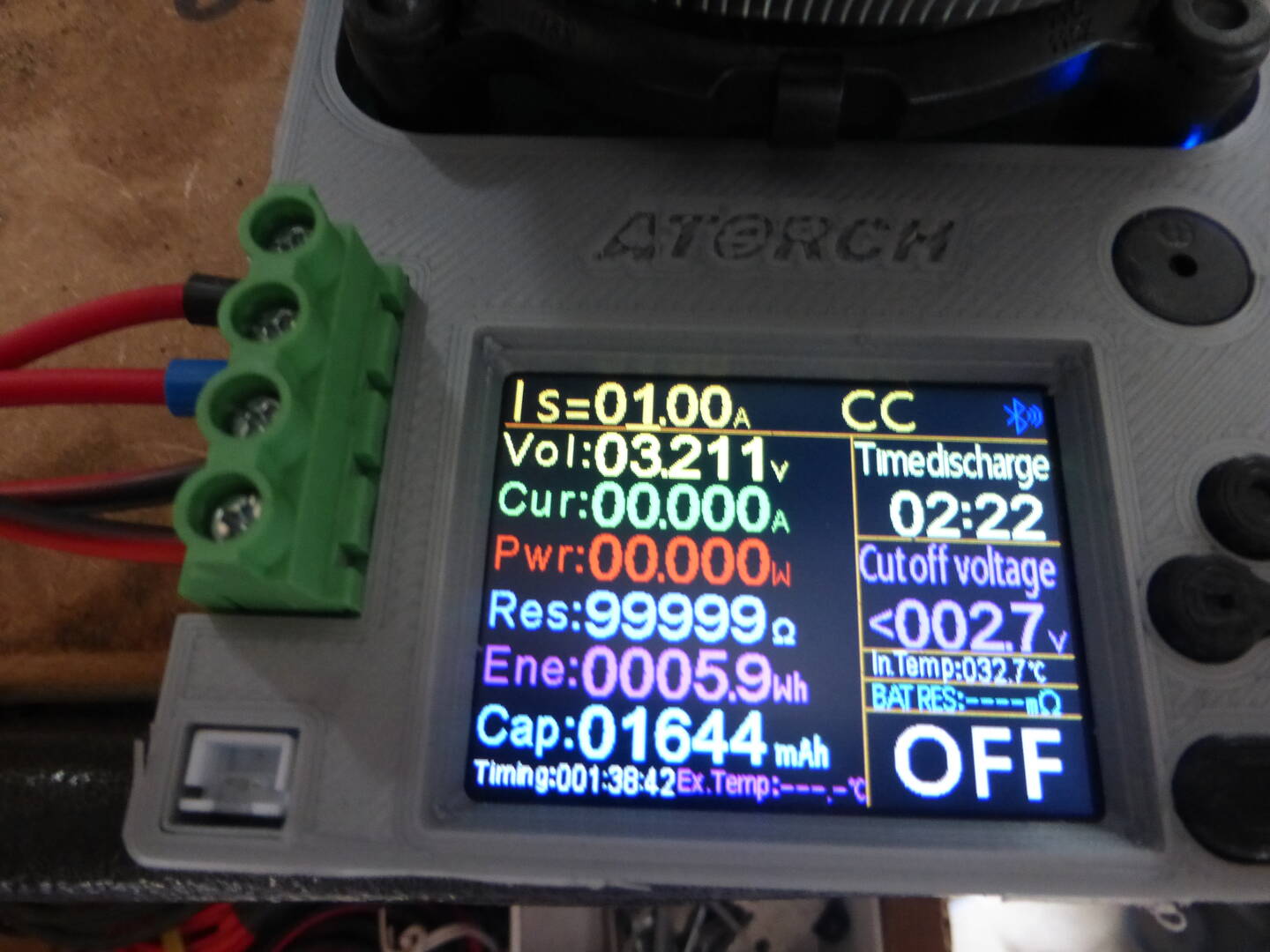
Ok so I errored by setting the cutoff voltage to 2.7. it appears there is an automatic cutoff in the battery, but there seems to be a relationship to the cutoff entered and the result. The second run cut off was 3.2 and it stopped at 3.5 where when the cutoff was 2.7 it stopped at 3.3. The end result of both tests were very close though. This has to be a protection in the battery, this will be identified as tests continue with different batteries. All in all a process and some basis points are being established. I have another machine to test with in a couple days to establish some base lines and determinations
This is Battery #1
start test fully charged
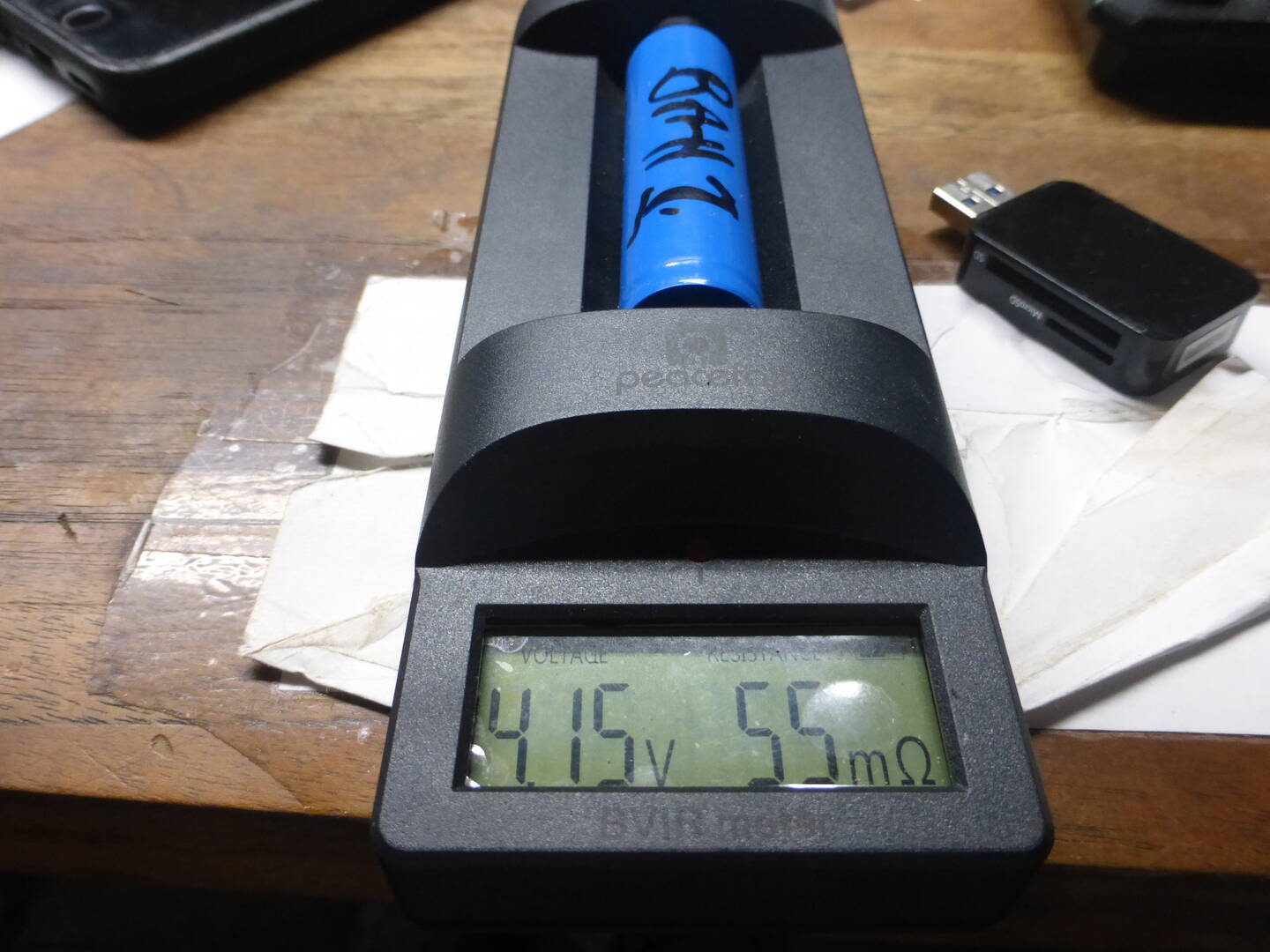
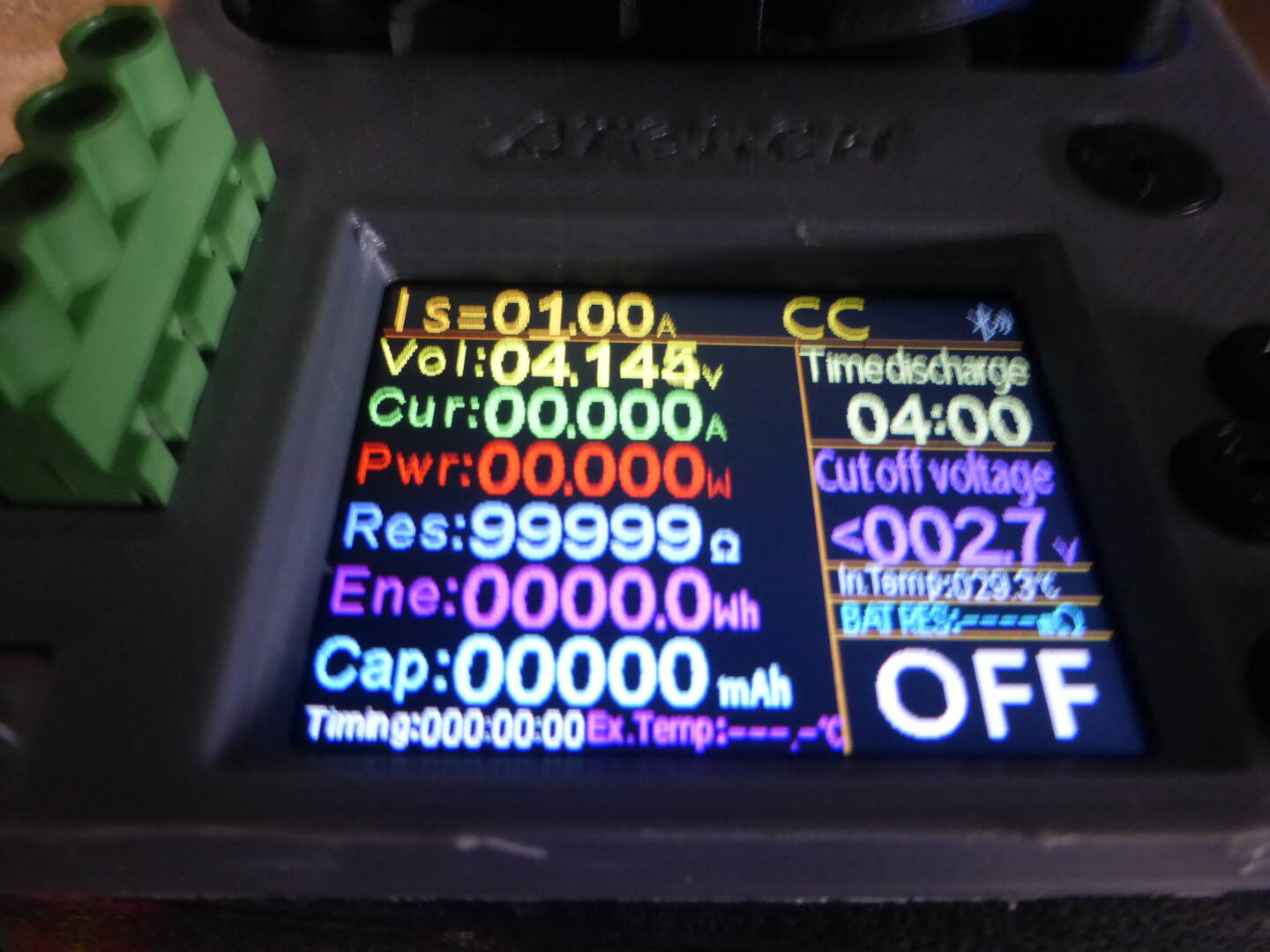
Results
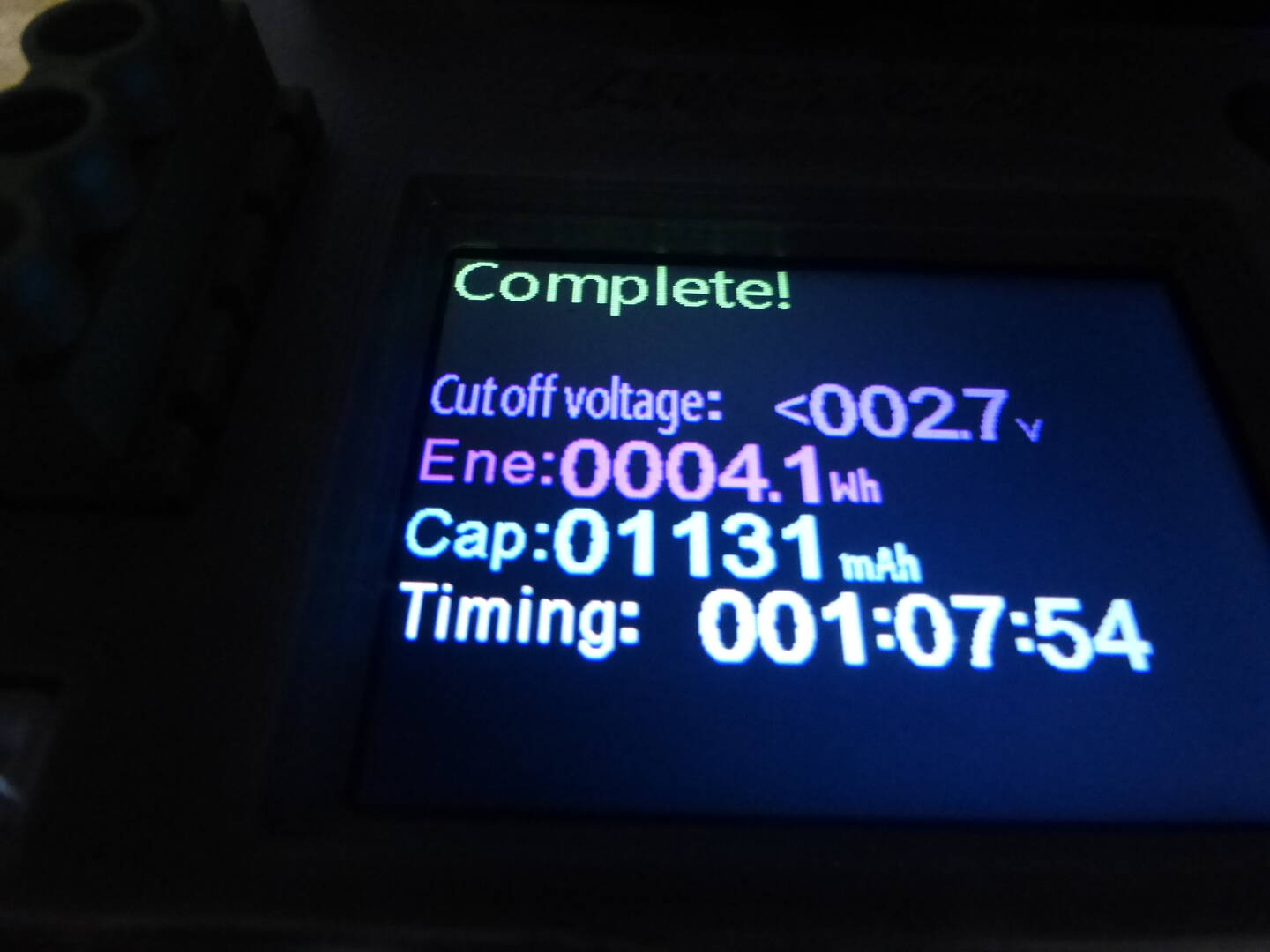
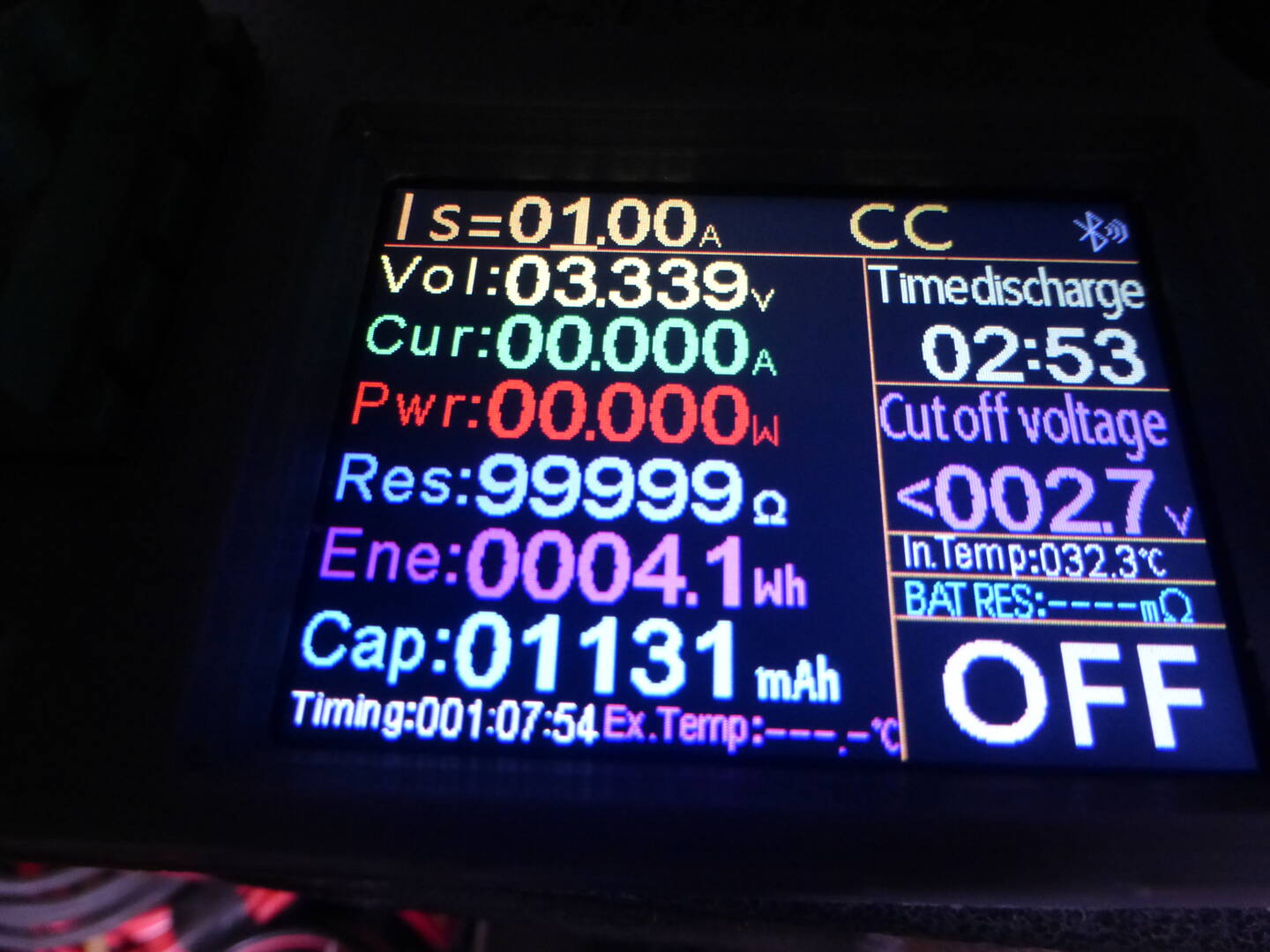
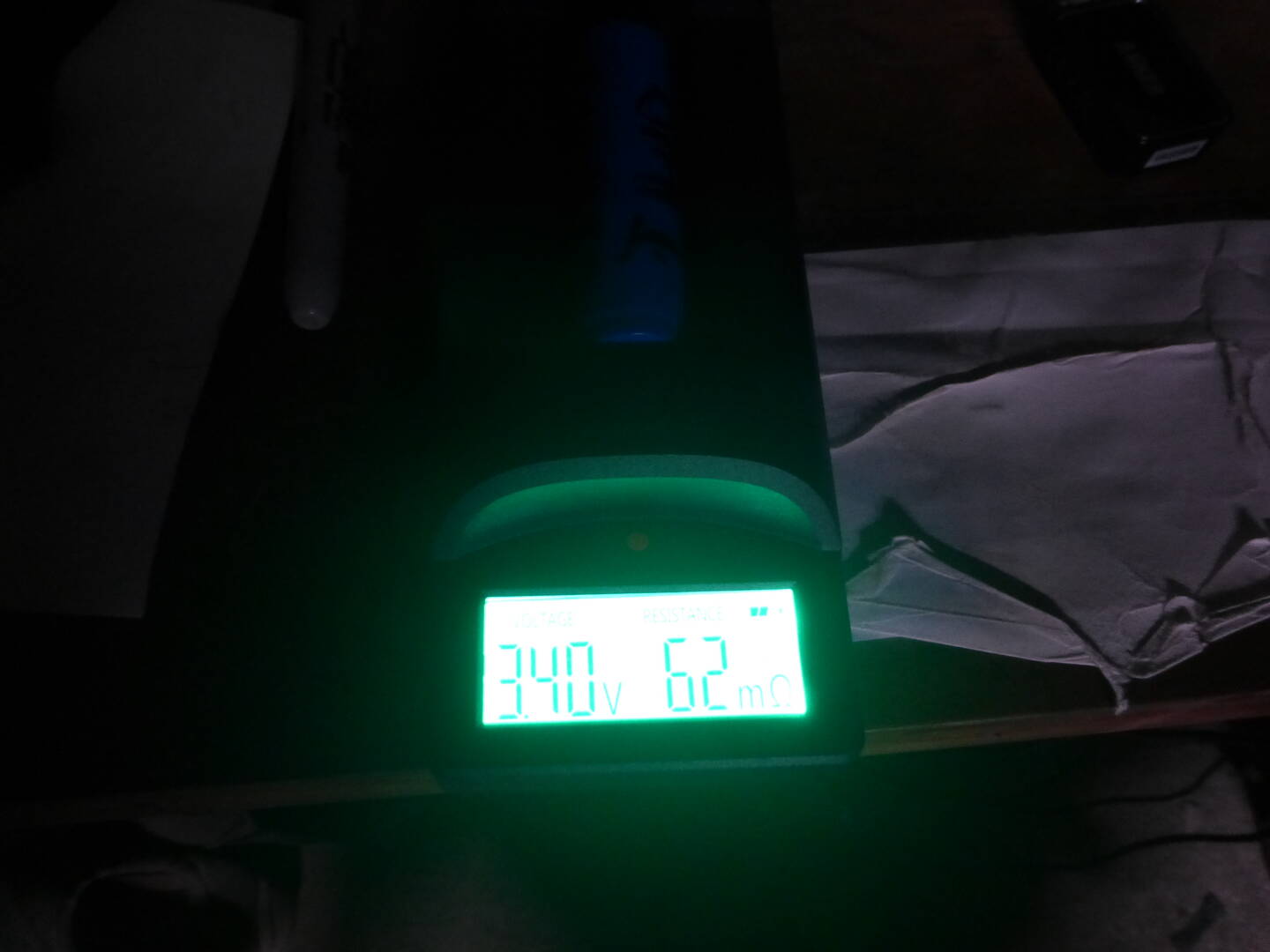
Test 2
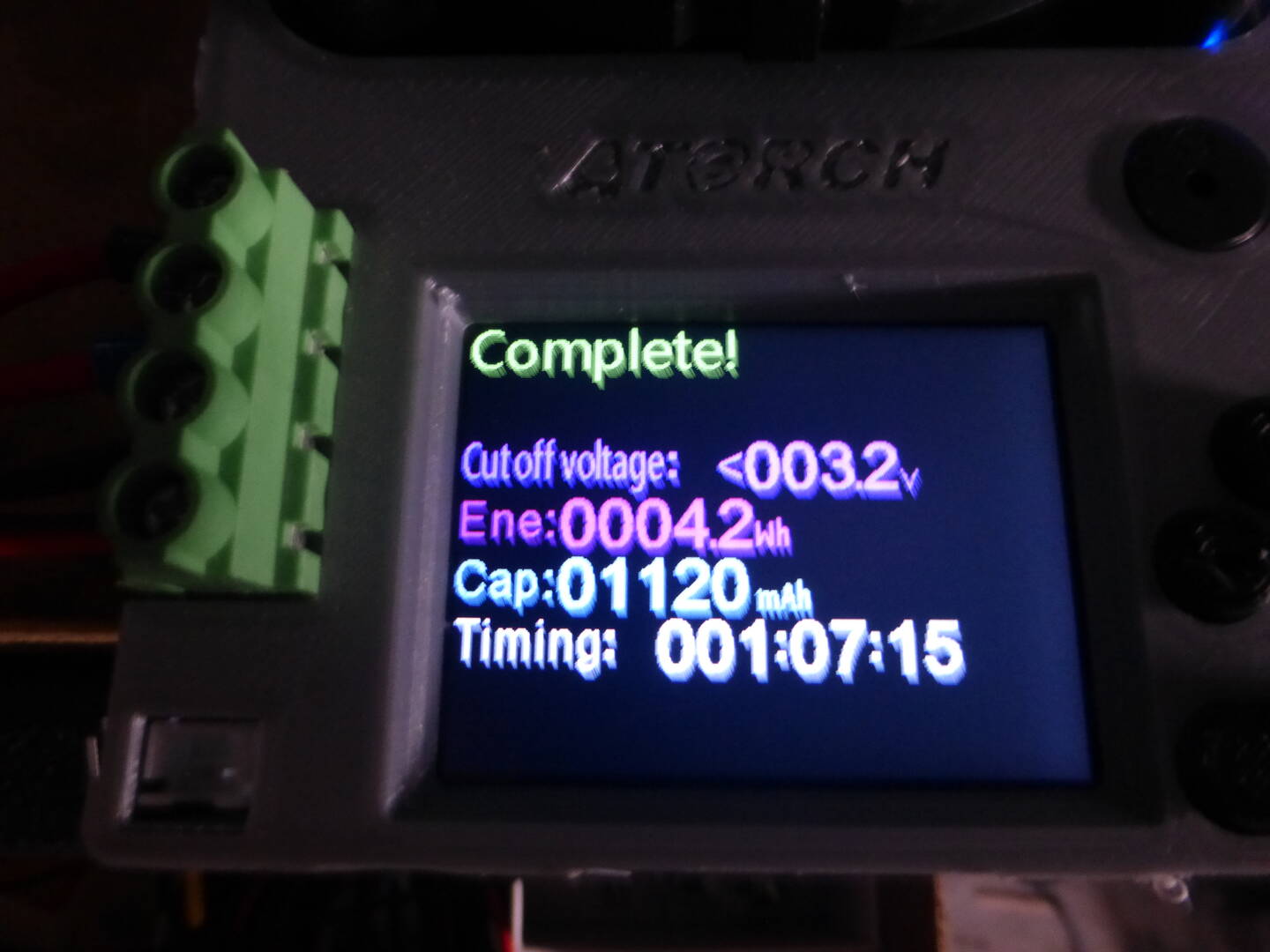
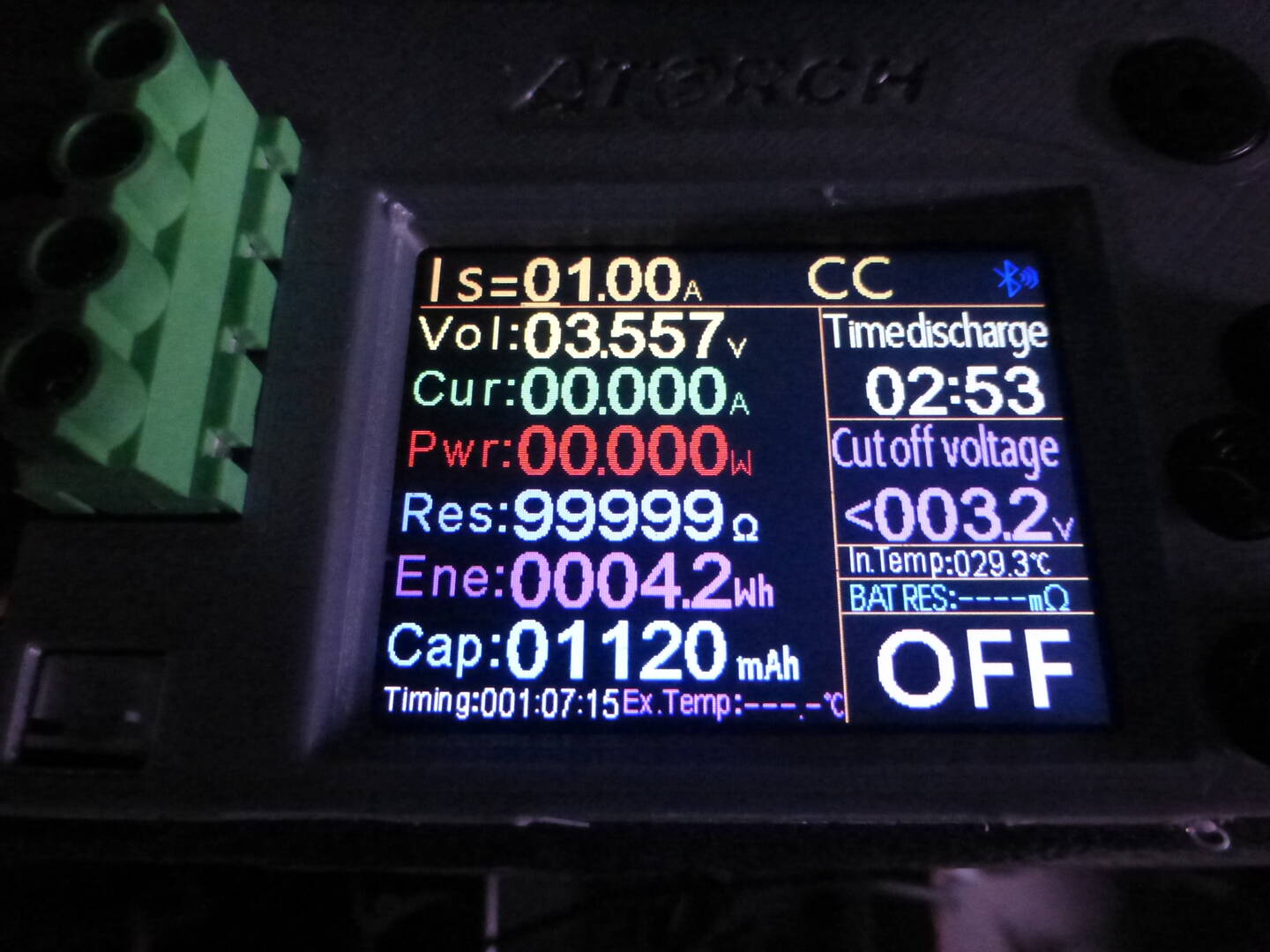
looking to compare testers and also get a better understanding of values we try a new cap test sys
Ok this is a new tester (China 5 bucks) This is batt #1
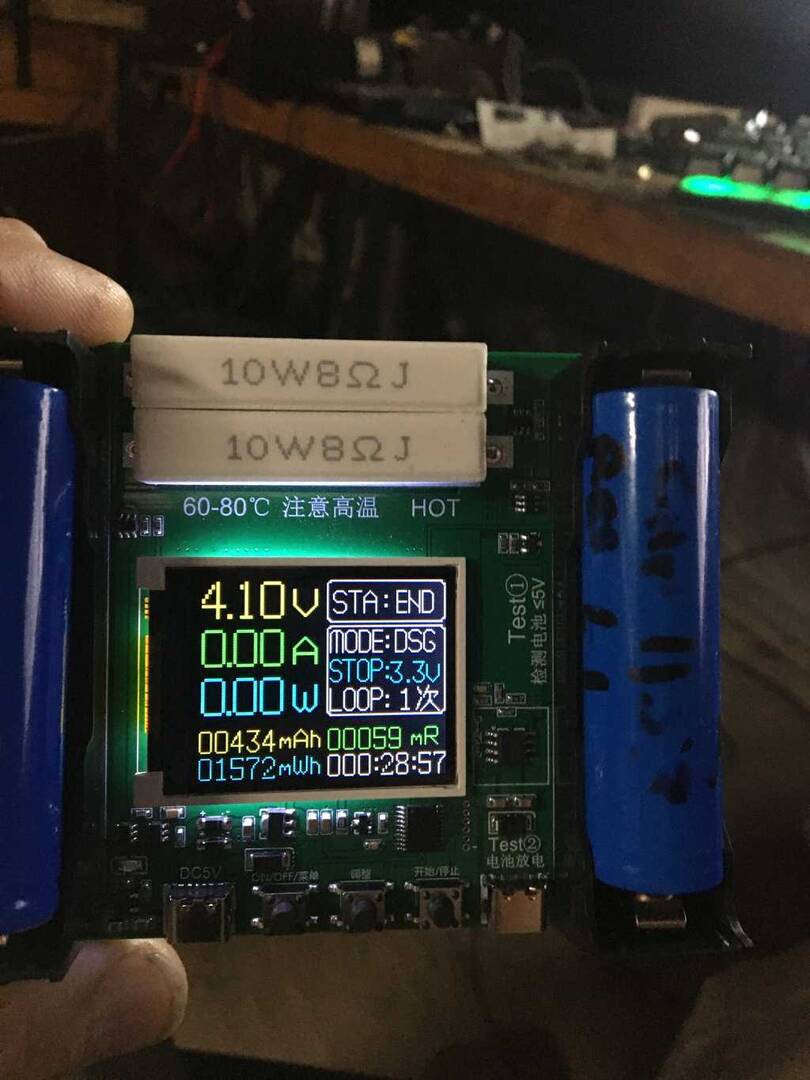
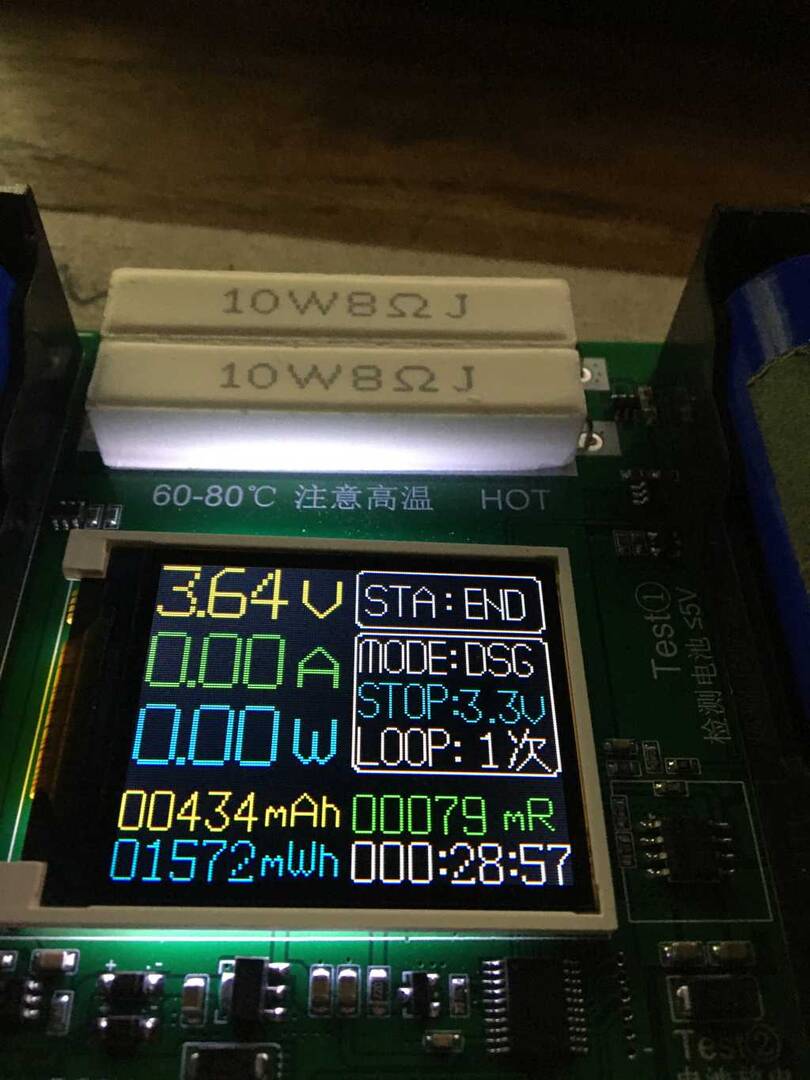
It compares pretty close to the dl24
ene 4.2kw
cap 1120 from dl24
New unbranded 18650 tester (5bucks)
ene 4.34
cap 1572
Most batteries have the mAh value printed on them and this would make comparing better because we would know the actual value to expect
![IMG 0263[1]](https://forumla.us/wp-content/uploads/wpforo/attachments/1/730-IMG02631.JPG "IMG 0263[1]")
![IMG 0262[1]](https://forumla.us/wp-content/uploads/wpforo/attachments/1/731-IMG02621.JPG "IMG 0262[1]")
This is battery #3
The cap of this battery is 1061mAh. This is a new battery, it's unbranded and also has no identifing information.
![IMG 0257[1]](https://forumla.us/wp-content/uploads/wpforo/attachments/1/726-IMG02571.JPG "IMG 0257[1]")
![IMG 0259[1]](https://forumla.us/wp-content/uploads/wpforo/attachments/1/727-IMG02591.JPG "IMG 0259[1]")
![IMG 0260[1]](https://forumla.us/wp-content/uploads/wpforo/attachments/1/728-IMG02601.JPG "IMG 0260[1]")